

Prague is one of those European capitals that seems to tick all the boxes: beautiful architecture, cobblestone streets, medieval castles, stunning viewpoints and a beer culture that’s practically legendary. It’s also incredibly photogenic thanks to its orange tiled rooftops, Gothic church spires and the Vltava River winding through the historic centre.
But it wasn’t always like this: Prague has changed considerably over the past few decades (and even quite a bit from when I first visited in 2005 compared to my next visit in 2019). After the Velvet Revolution brought an end to communist rule in 1989, the city opened up to the rest of the world. Historic buildings that had fallen into disrepair were restored, new businesses and restaurants moved into the city centre, and visitors arrived in droves.
Today Prague is one of Europe’s most visited capitals (and gets downright packed in the height of tourist season), but don’t let that deter you: it hasn’t lost the layers that make it so interesting.

I’ve visited Czechia several times, and have discovered plenty of quirky attractions beyond the main sights.
I’ve soaked in a beer bath, drank cocktails out of a gnome cup, slept in a medieval glamping tent, and even toured a church made from bones.
Whether you’re visiting for a quick city break or have several days to explore, here’s my guide to the best things to do in Prague, how to plan a three day itinerary, where to stay and fun day trips if you have extra time.

Quick guide to visiting Prague, Czechia
The must-sees: Charles Bridge, Prague Castle, Malá Strana, Old Town Square, Wenceslas Square, the Dancing House.
Favourite day trips: Cesky Raj, Kutna Hora, Ceský Krumlov
Getting there: Prague is very walkable, and parking can be a pain so I recommend using public transit, guided tours or your own two feet to get around. You’ll need a vehicle if you want to do independent day trips; I always book with Discover Cars.
Top tip: Remember that Czechia doesn’t use the euro, so you’ll want to keep some Czech Koruna on hand.
Know before you go: Travel insurance is an absolute must (I use SafetyWing), and an eSim to stay connected without the roaming fees. Use code TAMARA4142 for a discount on Airolo eSim packages.
Hotel pick: The Alchymist Grand Hotel and Spa in the Lesser Quarter
How many days do you need in Prague?
You’ll want to spend at least three days in Prague: this gives you enough time to see the main attractions, explore some of the different neighbourhoods and squeeze in a few unusual experiences without constantly rushing.
Short on time? You can see the highlights in one or two days by being strategic since the historic centre is quite walkable (although I only recommend this in a pinch; I only had one day in Prague during my first trip there and barely managed to see the main sites).
Here’s how to plan your Prague itinerary:
- 1 day in Prague: Charles Bridge, Prague Castle, Malá Strana and Old Town Square.
- 2 days in Prague: Add the Jewish Quarter, Wenceslas Square, the Dancing House and some of the city’s quirky attractions.
- 3 days in Prague: Visit Petřín Hill or Vyšehrad, and leave time for a beer spa or a short day trip.
If you have four or more days, definitely head off on a day trip in Czechia. There are stunning medieval towns, castles and natural attractions within easy reach of the capital.

Best things to do in Prague
Prague is a city where you can spend hours simply wandering around and getting that step counter up.
Its historic centre is a UNESCO World Heritage Site, and you’ll find an impressive mix of Gothic, Baroque, Renaissance and Art Nouveau architecture around almost every corner.
1. Walk across Charles Bridge
Charles Bridge is one of Prague’s most recognizable landmarks, connecting Old Town with Malá Strana.
Built in the 14th century, this historic stone bridge crosses the Vltava River, is lined with statues of saints, has impressive towers at either end and offers beautiful views of Prague Castle.
The bridge is usually bustling with musicians, artists, vendors and visitors, which gives it a lively atmosphere throughout the day, and is especially beautiful when the castle is lit up in the evening.
My advice: get here early in the morning if you want to enjoy it without quite so many people. Prague is an extremely busy destination, and this is one of the first places that fills up with visitors.

2. Explore Prague Castle
Perched above the city, Prague Castle is one of the most impressive sights in the Czech capital. It’s actually a sprawling complex rather than one single castle, with courtyards, churches and gardens spread across a large area.
The complex dates back to the 9th century and has served as the seat of Bohemian kings, Holy Roman emperors and Czech presidents.
Visiting the grounds is one of the best free things to do in Prague, but if you want a tour through the site it costs about $30 (buy an official entrance ticket here).
If you time it right, you can watch the Changing of the Guard which happens every day at noon in the First Courtyard (near Matthias’ Gate) and lasts about 15 minutes.
Prague Castle visiting hours
- Prague Castle complex: 6 am-10 pm
- Historical buildings: 9 am-5 pm
See opening hours for the cathedral and gardens here

There’s lots to see here, and highlights include:
- St. Vitus Cathedral: This enormous Gothic cathedral dominates the castle skyline. Its soaring ceilings, stained-glass windows and elaborate details make it one of the most impressive buildings in Prague.
- Golden Lane: A picturesque row of tiny historic houses that once accommodated castle guards, craftsmen and goldsmiths. Some have been converted into small exhibitions.
- Old Royal Palace: A historic building that was once home to Bohemian rulers.
- St. George’s Basilica: One of the oldest surviving church buildings within the castle complex.

Allow at least two to three hours to explore properly.
While exploring Prague Castle, make time to walk through the Royal Garden to see Queen Anne’s Summer Palace, also known as the Belvedere. The gorgeous exterior is covered in intricate stone reliefs, decorative arches and detailed carvings.

One thing to keep in mind is that the grounds are large and there are quite a few steps and hills. Wear comfortable shoes, especially if you’re planning to walk back down towards Malá Strana afterwards.

3. Visit St. Vitus Cathedral
Even if you aren’t particularly interested in churches, St. Vitus Cathedral is worth seeing to admire this Gothic masterpiece featuring enormous stained-glass windows with colourful light spilling across the interior.
Located within Prague Castle, it took centuries to complete and is one of the most important religious buildings in Czechia. The cathedral also houses the tombs of several Bohemian kings and Holy Roman emperors, along with the Chapel of St. Wenceslas, which is decorated with elaborate artwork and semi-precious stones.
Make sure to look up when you’re inside: the soaring vaulted ceilings are just as impressive as the intricate details at ground level.

4. Wander around Old Town Square
Old Town Square is the heart of historic Prague, and one of the prettiest places in the city.
The square is surrounded by colourful buildings, historic churches, cafés and restaurants, with a mix of architectural styles from Gothic to Baroque, and particularly enchanting when illuminated at night.
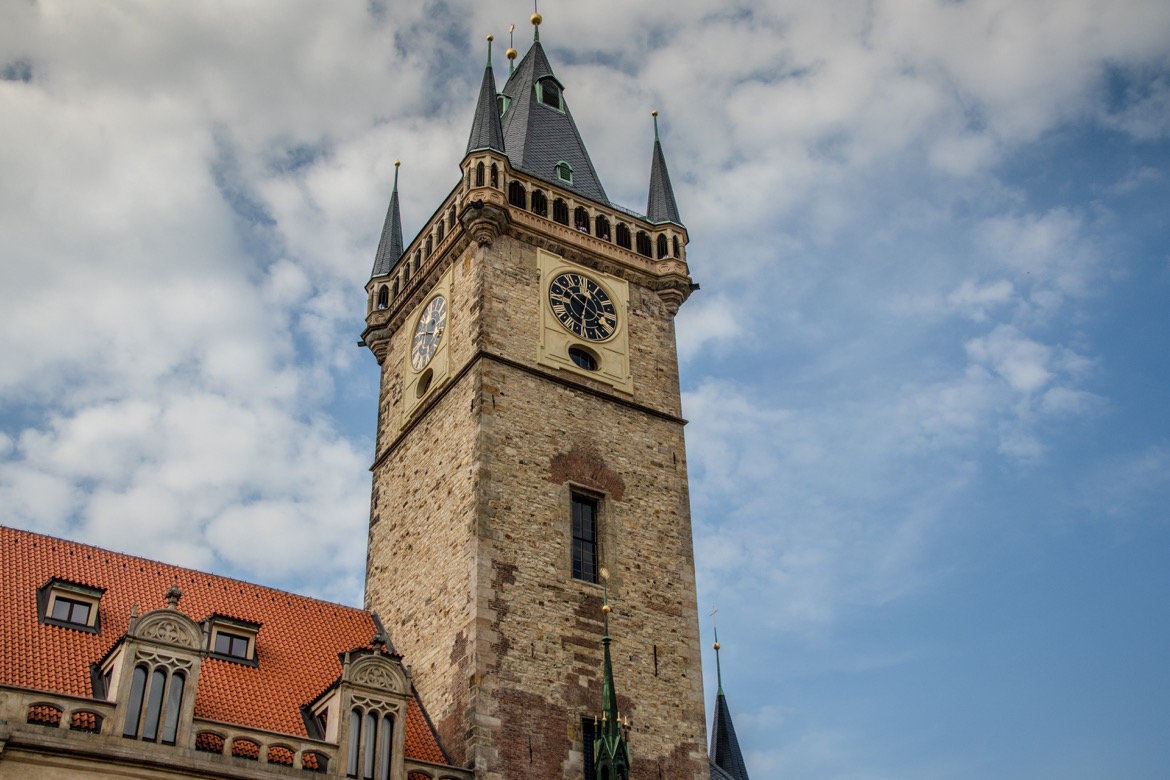
Some of the main sights include the Church of Our Lady before Týn, the Old Town Hall and the famous Astronomical Clock.
For amazing panoramic views, climb 138 steps up the Old Town Hall Tower for another perspective of Prague Castle, Lesser Town, Petřín Lookout Tower, the Vltava riverbanks and Kampa Island. Book a skip-the-line ticket and see current opening hours here.

5. See the Prague Astronomical Clock
The Astronomical Clock is one of the most famous attractions in Prague, dating back to the early 15th century which makes it one of the world’s oldest astronomical clocks still in operation.
Its intricate face displays the position of the sun and moon, the time and other astronomical information, and every hour crowds gather to watch its little mechanical show. Figures representing the Apostles appear in the windows while other moving figures come to life around the clock.
It’s a relatively short spectacle, but worth seeing at least once. Arrive a bit early if you want a decent view as the area gets crowded.
You can also book a tour that includes visiting inside the clock tower:
- Prague: Astronomical Clock Tower Entry Ticket & Audio Guide
- Prague Astronomical Clock (Prague Orloj) tours and tickets (Viator)
6. Explore Malá Strana (Lesser Town)
Across Charles Bridge from the Old Town is Malá Strana, also known as Lesser Town. This is one of my favourite areas to explore because it feels slightly quieter than the main tourist centre, while still being packed with gorgeous photo-ops.

The neighbourhood has cobblestone streets, pastel-coloured buildings, small squares and historic churches. It’s also home to some of Prague’s more unusual attractions, including some of the city’s famous David Černý sculptures and Vinárna Čertovka, commonly known as the Narrowest Street.
This tiny passageway is so narrow it has traffic lights at either end to prevent people from trying to squeeze through at the same time.
It’s only a short passage, but a fun little detour when exploring this part of the city. The entrance is easy to miss, so keep an eye out as you wander around the area.

7. See the Lennon Wall
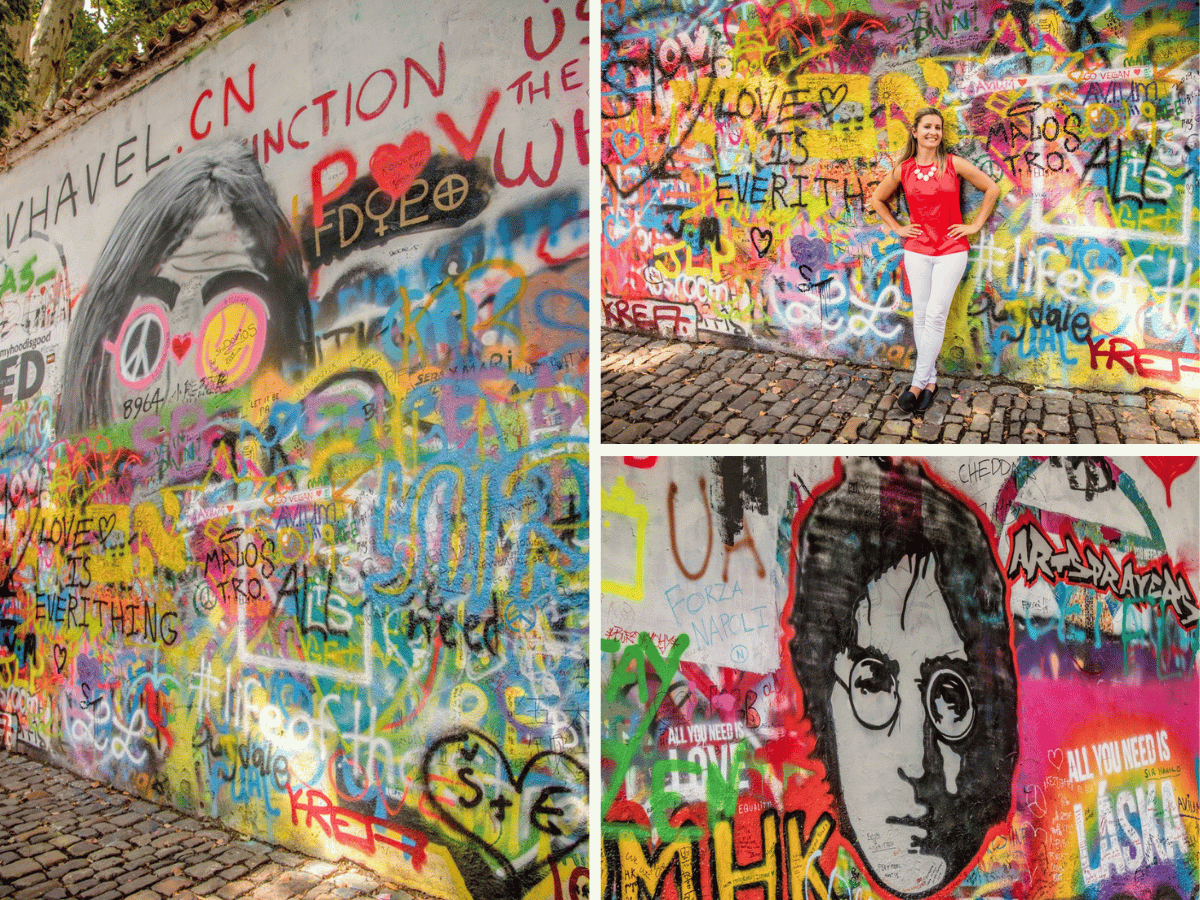
One of Prague’s most colourful spots is also in Malá Strana: the Lennon Wall, named after the famous Beatles frontman.
What started as a place for people to leave messages and graffiti inspired by John Lennon and The Beatles in the 1980s eventually became a symbol of peace, freedom of expression and resistance to the communist regime. Despite repeated attempts by authorities to paint over the messages, people continued returning to add their own artwork and words.
Today, the wall is covered in constantly changing layers of colourful graffiti, song lyrics, political messages and artwork.
8. Visit Petřín Hill and Lookout Tower
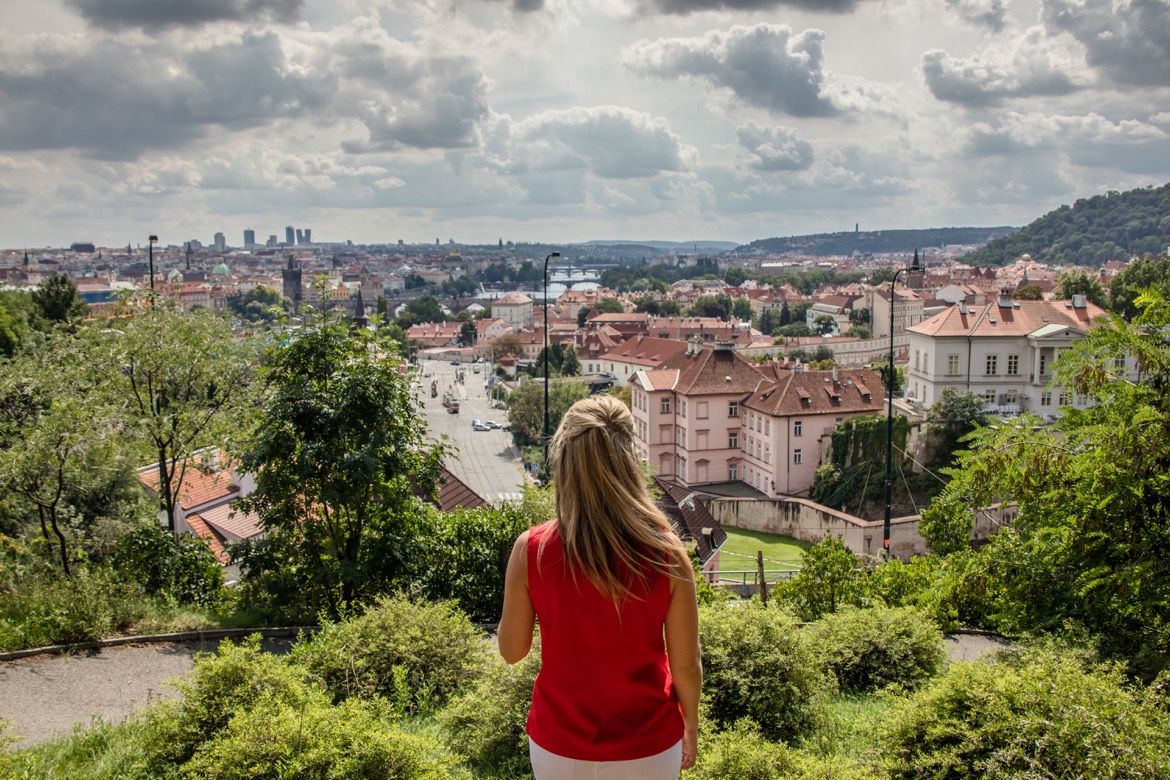
Some of the best views in Prague are found on Petřín Hill, a large green space overlooking the city with gardens, walking paths and several viewpoints.
Head up the Petřín Lookout Tower, inspired by the Eiffel Tower in Paris (though it’s considerably smaller at 58 metres tall) which has an observation deck with panoramic views.
You can climb the 299 stairs to the top or take the elevator, and be rewarded with views looking across the orange rooftops, Prague Castle and surrounding countryside.
See opening hours, prices and buy tickets here.
9. Discover the Jewish Quarter (Josefov)
Prague’s Jewish Quarter, known as Josefov, is one of the most historically significant parts of the city.
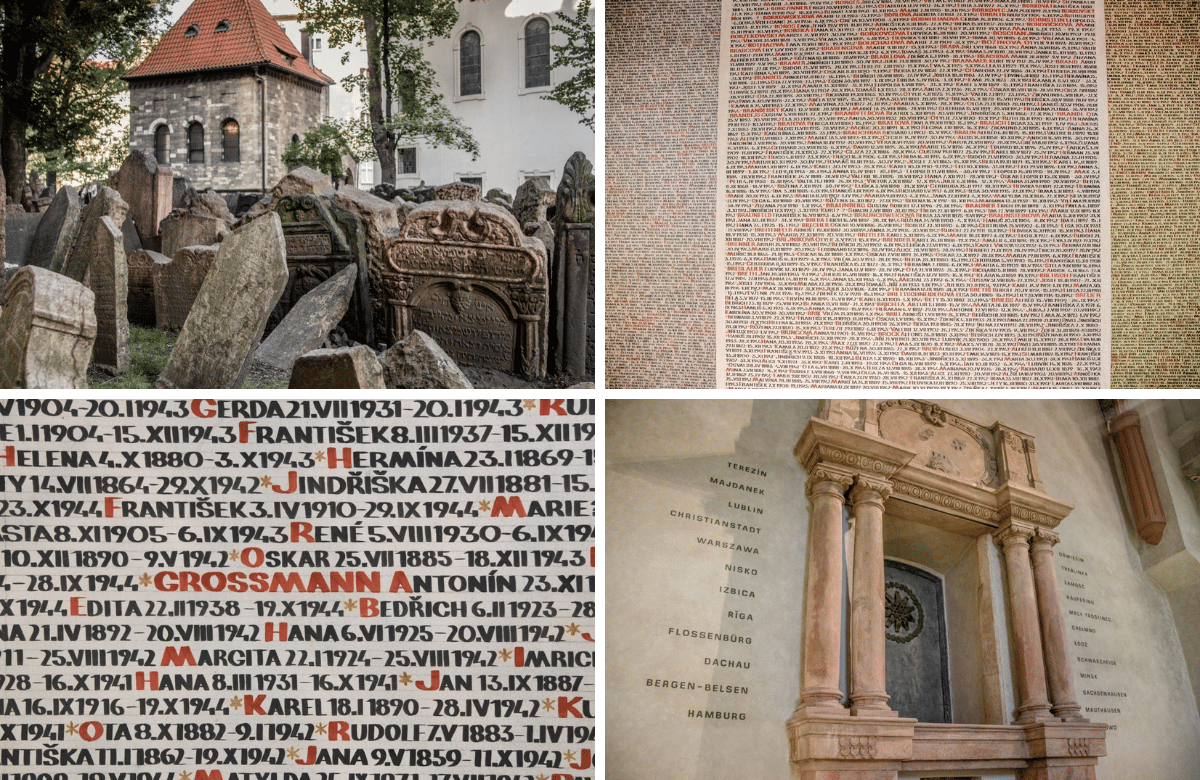
The area has a long and complex history, and several important Jewish heritage sites are preserved here. These include historic synagogues, the Jewish Museum and the Old Jewish Cemetery.

The cemetery is particularly striking, with thousands of gravestones crowded together in a relatively small space. It’s a sobering reminder of the difficult history of Prague’s Jewish community.
Pinkas Synagogue: Holocaust Memorial
One of the most sobering places to visit in Prague’s Jewish Quarter is the Pinkas Synagogue, which has been transformed into a memorial to the Jewish victims of the Holocaust from Bohemia and Moravia. The interior walls are covered with the handwritten names of nearly 80,000 people who were murdered by the Nazis, including their birth dates and, where known, dates of death.
10. Visit Wenceslas Square
Wenceslas Square has played an important role in Czech history, serving as the setting for major political demonstrations and celebrations including events during the Velvet Revolution.
Despite what it’s name suggests, it’s actually a long boulevard rather than a traditional square, lined with shops, hotels, restaurants and historic buildings.
At the top is the National Museum, an impressive Neo-Renaissance building overlooking it all.

It’s an easy stop to combine with the Old Town, and you’ll likely pass through here while exploring central Prague, and you’ll see this area really come alive at night.

11. Admire the Dancing House
While Prague is famous for its architecture, not everything here is centuries old.
The Dancing House is one of the city’s most recognizable modern buildings, which was designed by architects Vlado Milunić and Frank Gehry in the 1990s and meant to resemble a pair of dancers.
Snap pics from the street, then head inside where you’ll find a restaurant, hotel and rooftop terrace.

12. Czech-out the quirky sculptures around Prague
Speaking of unusual art, Prague is filled with unique sculptures including:
- The Crawling Babies: These giant baby sculptures with barcode-like faces can be found climbing the Žižkov Television Tower (some are also found on Kampa Island.)
- The Piss Sculpture: This fountain features two bronze figures urinating into a pool shaped like Czechia.
- The Head of Franz Kafka: A large rotating sculpture outside the Quadrio shopping centre, made up of layers of stainless steel that move independently to form and reform the writer’s face.

13. Soak in a Czech beer spa
Even if you don’t like beer (it’s me, hi), you’ll definitely want to try soaking in suds at a beer spa!
One of the most unusual things I’ve done in Czechia is have a beer bath, where wooden tubs are filled with a warm mixture of water, hops and brewer’s yeast. There’s often a beer tap nearby so you can enjoy a pint while you soak, and relaxation areas like a heated bed or straw lounger.
There are several beer spas in Prague, with different packages and facilities including salt caves. Definitely book ahead, especially if you’re travelling as a couple or group and want a private room.

14. Ride a paternoster elevator
This is one of the strangest attractions in Prague, and it’s something most visitors would probably walk right past without realizing what they’re looking at.
A paternoster is an old-fashioned elevator made up of a series of open compartments that continuously move in a loop, travelling up one side of the shaft and down the other.
There are no doors, and the elevator never stops. You have to time your entrance and exit as the compartments pass your floor, and yes, it’s slightly terrifying.
There are a few historic paternoster elevators around Prague, although public access depends on the building. It’s best to book the Prague City Hall Paternoster Tour (about $15) at New Town Hall (Nová radnice) which was installed in 1911 making it Prague’s oldest and most famous paternoster.

15. Enjoy a boat ride
Taking a boat ride along the Vltava River is a nice way to see Prague from a different perspective, especially when you’ve spent all day walking its cobblestone streets.
Several sightseeing cruises pass some of the city’s best-known landmarks: you can opt for an hour-long sightseeing cruise, or make more of an outing with a lunch or dinner cruise. Evening cruises are especially nice when Prague Castle and the riverside buildings are illuminated.
A traditional sightseeing cruise is one way to see Prague from the water, but there’s a much more unusual option if you’re looking for something different: on Slavonic Island, you can rent small pedal boats shaped like cars, swans and other fun designs.
This is especially popular on a hot summer day, and a fun group activity in Prague. The season for these usually runs from April-October.

Where to eat in Prague
Traditional Czech food is hearty, filling and very meat-heavy. Expect to see plenty of pork, beef, sausages and dumplings on menus, often served with rich sauces.
I travelled with vegans in our group, and they found it a little challenging to find as much variety as they would have liked. There are certainly vegetarian and vegan options around Prague, particularly at international restaurants and more modern cafés, but I’d recommend researching menus ahead of time rather than assuming every restaurant will have something suitable.
Prague also has a strong beer culture, so you’ll find plenty of traditional pubs and beer halls.

Where to stay in Prague
For a first visit, I’d recommend staying in or near Prague 1, which covers much of the historic centre. This puts you within walking distance of Old Town Square, Charles Bridge and many of the city’s main attractions.
Old Town is particularly convenient, while Malá Strana is fabulous if you prefer a slightly quieter neighbourhood with historic charm.
Here are a few top-rated hotels worth considering at different price points:
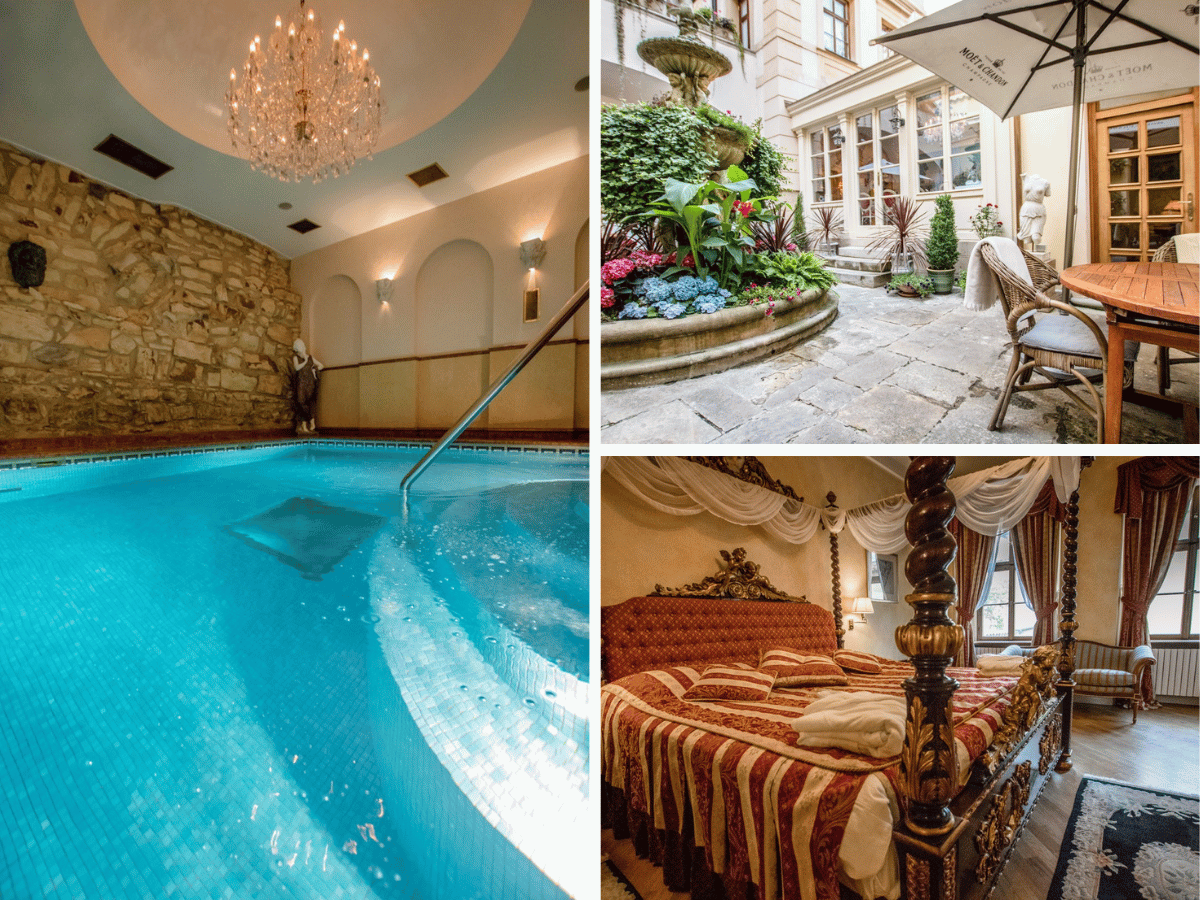
Alchymist Grand Hotel and Spa
The sweet suites at Alchymist Grand Hotel and Spa in the Lesser Quarter are the ultimate in luxury: think elegant rooms with a flair of baroque touches, crystal chandeliers and canopy beds fit for royalty.
Set inside a 16th century building, one of its biggest draws is the Ecsotica Spa where you can swim in an atmospheric indoor pool beneath a glittering chandelier.
Four Seasons Hotel Prague
If you’re looking to splurge, the Four Seasons Hotel Prague is tops when it comes to location. Set along the Vltava River in the historic centre, the five-star property is spread across four buildings dating back to 1568, steps from Charles Bridge with beautiful views towards Prague Castle.
Interiors feature Bohemian crystal chandeliers, and there are multiple dining venues (including some of the top ranked restaurants in Prague with views) and AVA Spa.
INNSiDE by Meliá Prague Old Town
For a comfortable, modern stay without going all-out on a luxury hotel, INNSiDE by Meliá Prague Old Town is a good option.
The four-star hotel is located on a quieter street in the historic centre, within walking distance of Old Town Square and close to public transportation options.
Adria Hotel Prague
I stayed at The Adria, and while it’s pretty basic and traditional, its pricing and location in the heart of Wenceslas Square can’t be beat. The property dates back to 1912, and rooms are clean and quiet which makes for a nice respite from the bustling action found outside the front doors.

There’s also quite a surprise in the basement: Triton Restaurant, where you can dine in a cave!
Based in a stalactite cave, the art nouveau decor adorning the craggy walls is an ode to Greek, Roman and Egyptian mythologies, and represents the underworld Hades.

Prague itinerary: How to spend 1, 2 or 3 days in Prague
Here’s how I’d plan a Prague itinerary depending on how much time you have:
One day in Prague
If you only have one day in Prague, focus on the historic centre. It’s a busy day with lots of walking, but you can cover quite a bit if you get an early start.
Morning: Charles Bridge and Prague Castle
- Start early at Charles Bridge before the crowds arrive. Walk across towards Malá Strana, then make your way uphill to Prague Castle.
- Spend a couple of hours exploring the castle complex, including St. Vitus Cathedral and Golden Lane.
Afternoon: Malá Strana and Old Town Square
- Head back down through Malá Strana, stopping to explore its charming streets and small squares. If you have time, visit the narrowest street before crossing Charles Bridge back into Old Town.
- Make your way to Old Town Square to see the Astronomical Clock, the Church of Our Lady before Týn and the surrounding historic buildings.
Evening: Dinner and a walk along the river
- Finish your day with dinner somewhere in the centre, then take an evening stroll along the Vltava River to see the castle and bridges illuminated.
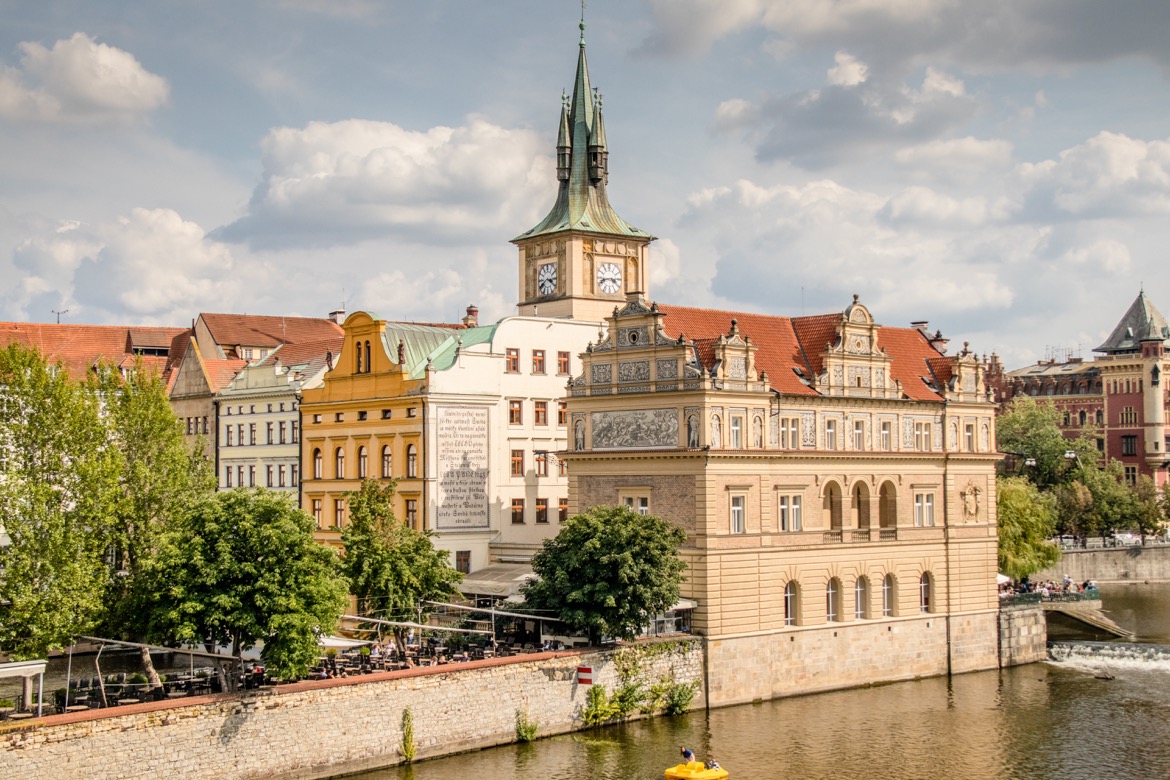
Two days in Prague
With 2 days in Prague you can see the main attractions without rushing as much, and have time to explore some of the city’s more unusual sights.
Follow the itinerary above, then use your second day to explore a different part of the city.
Morning: Jewish Quarter and Old Town
- Start in Josefov and visit the Jewish Museum and Old Jewish Cemetery.
- Afterwards, walk through Old Town and head towards Wenceslas Square. Stop at the National Museum if you’re interested in exploring further.
Afternoon: Dancing House and the riverfront
- Make your way towards the Dancing House to see its unusual architecture. From here, you can walk along the riverfront or find a café for a break.
- If you’re interested in Prague’s modern art and quirky side, look for some of David Černý’s sculptures around the city.
Evening: Beer spa or cocktail bar
- This is the perfect time to book a beer spa experience. It’s a fun way to unwind after a couple of days of sightseeing, and definitely not something you get to do in every city.
- Alternatively, head to Hemingway Bar which is one of Prague’s best-known cocktail bars. Inspired by Ernest Hemingway, there’s an extensive cocktail list, and the bartenders take their drinks seriously. They come in some pretty cool vessels too; when I visited, my drink was served in a copper gnome!

Three days in Prague
3 days in Prague gives you a much better opportunity to explore beyond the main tourist trail. Use it to visit Petřín Hill, Vyšehrad or some of the city’s less-visited neighbourhoods.
Morning: Petřín Hill and the lookout tower
- Start with a visit to Petřín Hill. Walk through the gardens and climb the lookout tower for panoramic views over the city.
Afternoon: Vyšehrad
- Continue to Vyšehrad, a historic fortification overlooking the Vltava River south of the city centre. The area is much quieter than Prague Castle and has beautiful views, historic ramparts, a cemetery and the Basilica of St. Peter and St. Paul.
Evening: Explore more of Prague’s quirky side
- Use your final evening to soak up the vibes in Wenceslas Square or visit any unusual attractions you haven’t managed to fit in. You could explore Střelecký Island, book a special dinner or beer pub crawl.

Best day trips from Prague
One of the things I love about Prague is that it’s a great base for exploring more of Czechia, so if you have more than three days there I highly recommend doing some easy day trips.
Here are some of my favourite places to visit near Prague (starting with the closest):
Kutná Hora and the Sedlec Ossuary Bone Church
Kutná Hora is best known for its beautiful architecture and the rather macabre Sedlec Ossuary, AKA the Bone Church.
Yes, this chapel is decorated entirely with human bones and skulls, including an enormous chandelier. They’re believed to belong to tens of thousands of people who died centuries before during periods of plague and war.
Drive time from Prague: 1 hour
Tours from Prague to Kutná Hora:
- From Prague: Kutna Hora UNESCO Site Tour with Bone Chapel
- Day Trip to Kutná Hora by train from Prague

Český ráj (Bohemian Paradise)
To experience Czechia’s more natural side, head to Český ráj, also known as Bohemian Paradise.
This protected landscape area is known for its unusual sandstone rock formations, forested trails, castles and beautiful countryside. It’s a great destination for hiking and exploring outdoors, with castles perched dramatically over the rock formations.
Tip: Dress like you’re going on a hike; our group of gals was made to believe we’d be seeing castles and all wore dresses, which turned out to be insane when we got there since it’s more like scampering over boulders!
Drive time from Prague: 1hr15 min
Tours from Prague to Český ráj (Bohemian Paradise):
- Bohemian Paradise (Český ráj) UNESCO geopark nature walks
- From Prague: Full-Day Bohemian Paradise Guided Hiking Trip

Hluboká Castle
Hluboká Castle in South Bohemia almost looks like something you’d see in England, with pointed towers, decorative turrets and beautifully landscaped grounds.
It’s in the same general region as Český Krumlov, so combine the two if you’re planning a longer road trip through South Bohemia. Allow at least an hour to explore the castle grounds and gardens, rather than just stopping for a quick photo.
Drive time from Prague: 1hr45 min
Tours to Hluboka Castle from Prague:
- From Prague: Excursion to Český Krumlov and Hluboká Castle
- Private Tour of Cesky Krumlov and Hluboka Castle from Prague
- From Prague: Tour to Český Krumlov and Hluboká Castle

Český Krumlov
I’ve visited Český Krumlov twice, and it’s one of the prettiest towns in Czechia if not all of Europe!
Located in South Bohemia, this UNESCO-listed town looks like something straight out of a storybook. Its historic centre is filled with colourful buildings, winding cobblestone streets and a beautiful castle complex overlooking the Vltava River. There’s even a bear pit.
Drive time from Prague: 2 hours
Tours to Český Krumlov from Prague:
- Český Krumlov UNESCO Day Trip from Prague (Award-Winning)
- From Prague: Full-Day Trip to Český Krumlov

Getting around Prague and exploring Czechia by car
I definitely wouldn’t plan on renting a car to explore Prague: between walking, the metro, trams and buses, it’s easy enough to get around without having to deal with traffic, parking or navigating the narrow streets.
If you plan on seeing more of Czechia though, it’s a different story. I once spent a few days in Prague then rented a car on the way out of the city for a solo road trip and found it extremely easy to get around.
Having your own vehicle gives you much more flexibility, especially when visiting smaller villages, castles and countryside attractions that aren’t always as convenient to reach by public transportation.

A few tips if you’re planning a road trip in Czechia:
- Pick up your rental car after exploring Prague: There’s no need to pay for a rental while you’re spending time in the city.
- Check parking before arriving: Many historic centres have restricted vehicle access, so you may need to park outside the pedestrian areas. Keep cash on hand, as I learned the hard way that some parking metres don’t accept credit cards!
- Confirm rental requirements: Make sure your rental company explains the local driving rules, insurance and any cross-border restrictions if you’re planning to visit neighbouring countries.
If you only have time for one road trip, I’d consider South Bohemia which combines Český Krumlov with Hluboká Castle. If you prefer something closer to Prague, Kutná Hora is a quicker option.

Practical tips for visiting Prague
When is the best time to visit Prague?
Prague is a year-round destination, but spring and fall are best if you want comfortable sightseeing weather without peak summer crowds.
- Spring (April to May): The city starts to come alive after winter, with blossoming trees, outdoor cafés and milder temperatures.
- Summer (June to August): This is the busiest period, with longer days, warm weather and plenty of outdoor events. It’s also when the main attractions can feel particularly crowded, so get an early start.
- Fall (September to October): Autumn is another great time to visit: my last two trips to Czechia were in September and October, and the weather was fabulous. Fall colours start to appear and the summer crowds begin to thin out (slightly…it’s still very busy!).
- Winter (November to March): Prague can be cold, but the Christmas markets are a major draw in December and the historic centre looks particularly beautiful with festive lights and decorations.
How do you get around Prague?
Prague is easy to explore on foot, especially if you’re staying in or near the historic centre.
For longer distances, the city has an extensive public transportation network that includes metro lines, trams and buses. It’s reliable and relatively inexpensive compared with many other European capitals.
You can buy individual tickets or passes for longer stays, and tickets need to be validated when you start your journey. Check the official Prague Public Transit Company website for routes, fares and ticket options.
I’m always a big fan of Hop-On Hop-Off bus tours when visiting big cities, which take you directly to the main sites and are double-deckers for sightseeing along the way. This Prague Hop On Hop Off Tour with River Cruise combines a 24 or 48 hour pass with a boat ticket.
What currency does Prague use?
Czechia uses the Czech koruna (CZK), not the euro.
Some businesses may accept euros, but you’ll generally get a better deal paying in local currency. Credit and debit cards are widely accepted around Prague, although it’s still useful to have a little cash for smaller purchases.
When withdrawing money, use a reputable bank ATM and avoid accepting a conversion into your home currency if the machine offers its own exchange rate. Airports usually have the worst rates, so try to wait until you’re in the city.
Is Prague expensive?
Compared with cities like Paris, London and Zurich, Prague can be relatively affordable, although prices in the main tourist areas have increased over the years; I was honestly shocked at how much more expensive it was when I returned in 2019, compared to first trip as a backpacker in 2005! Darn that inflation…
Accommodation is likely to be your biggest expense, particularly during the summer and around Christmas. Food, public transportation and many attractions can still offer good value compared with other popular European capitals.
You’ll also save money by walking between attractions or public transportation.
Is Prague safe?
Prague is generally considered a very safe city for visitors, and I’ve travelled here as a solo female without any issues.
As with any popular tourist destination, keep an eye on your belongings in crowded areas, particularly around Charles Bridge, Old Town Square and busy public transportation stops. Pickpocketing can happen where there are large crowds, though it’s not as big of an issue here as in places like Barcelona or Paris.

FAQ about visiting Prague
Is Prague a walkable city?
Absolutely, and this is actually the easiest way to get around. Much of Prague’s historic centre is pedestrian-friendly, and many of the major attractions are within walking distance of one another. Some areas are hilly and the streets are cobblestoned, so comfortable shoes are a must.
Can you visit Prague in one day?
You can see several of Prague’s main highlights in one day including Charles Bridge, Prague Castle, Malá Strana and Old Town Square.
What are the best day trips from Prague?
Some of the best day trips include Kutná Hora and the Sedlec Ossuary Bone Church, Český Krumlov, Hluboká Castle and Český ráj. I’ve visited all of these places independently and enjoyed having a rental car to explore at my own pace.
Do you need a car in Prague?
No. I wouldn’t recommend renting a car while exploring Prague. The historic centre is walkable, and public transportation is excellent. However, renting a car is a great option if you’re planning to explore more of Czechia independently.
Final thoughts: Is Prague worth visiting?
After visiting Czechia multiple times, I’d absolutely recommend a stop in Prague which in my opinion is one of the prettiest large cities in Europe and has a mix of both classic and quirky attractions.
If time allows, don’t limit your trip to the capital. Some of my favourite experiences in Czechia have actually been outside Prague, especially walking through medieval Český Krumlov, medieval glamping and seeing the incredible Bone Church in Kutná Hora.
Budget at least three days in Prague, then consider renting a car to see more of the country. There’s lots to discover!

YOU MIGHT ALSO ENJOY:
- 8 quirky, fun things to do in Prague
- A noble night out: Medieval glamping in Malešov, Czechia
- 10 tips for travelling to Europe for the first time
SHARE THE PINSPIRATION! CLICK THE IMAGES BELOW TO PIN:


This post may contain affiliate links, which Globe Guide receives compensation for at no additional cost to you.

Pingback: Munich: The heart of Bavaria | Globe Guide
Pingback: Top 10 things to keep in mind if you’re heading to Europe | Globe Guide
Pingback: Why Souvenirs Suck | Globe Guide
Pingback: Why Brussels, Belgium should be on your European travel list
Pingback: 5 reasons to book your next Europe vacation with Air Transat
Pingback: 8 quirky, fun things to do in Prague
Pingback: Fun, quirky things to do in Kutna Hora, Czech Republic